Unlocking the Aesthetic of Vintage Palm Tree Journal Pages
There is a specific type of creative fatigue that sets in when every digital asset looks hyper-modern and sterile. For designers, scrapbookers, and brand strategists working within the lifestyle, travel, or wellness sectors, the challenge is often finding textures that evoke a sense of history and warmth without looking dated or low-quality. This is exactly the void that Vintage Palm Tree Journal Pages fills. It is not merely a collection of images; it is a toolkit for creating atmosphere. With a personality defined by organic nostalgia and a relaxed, botanical elegance, these backgrounds offer a visual shorthand for summer, leisure, and handwritten authenticity.
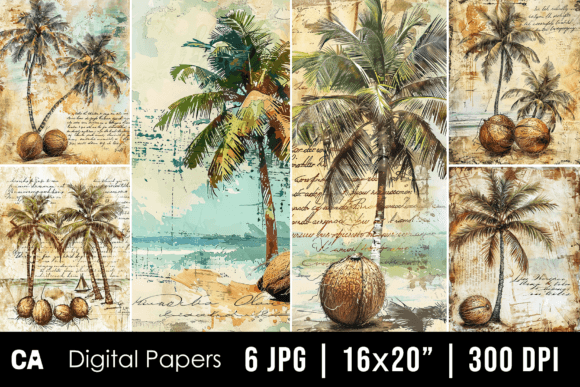
The core appeal of this collection lies in its textural complexity. We are talking about six distinct printable digital backgrounds that simulate the look of aged paper and botanical illustrations. The visual style balances the structured repetition of the palm fronds with the chaotic, soft imperfections of vintage paper stock. When you look at the Vintage Palm Tree Journal Pages, you aren't just seeing a tree; you are seeing a mood. The color palette likely leans into sepia tones, muted greens, and the creamy off-whites of old parchment. This creates an immediate emotional connection, suggesting that the content placed upon it is handwritten, personal, and valuable. It appeals to the modern desire for "analog" aesthetics in a digital world, making it a potent asset for anyone looking to infuse their projects with character.
Strategic Applications for Branding and Marketing
While the name suggests journaling, the utility of these high-resolution backgrounds extends far into professional branding and marketing. In the current market, brand identity is often driven by storytelling. A brand that wants to position itself as "authentic" or "heritage-inspired" cannot use generic, sterile corporate templates. Vintage Palm Tree Journal Pages provide an immediate visual anchor for brands in the hospitality, eco-tourism, or bohemian fashion spaces. Imagine using these backgrounds as the canvas for a social media campaign; the texture grabs the eye in a feed dominated by flat, vector graphics. The vintage aesthetic signals a slower pace of life, which is a powerful psychological trigger for consumers looking for escape or relaxation.
For marketing materials, these assets offer immense versatility. Consider the following practical applications:
- Menu Design and Packaging: For a beachside café or a tropical cocktail brand, using these backgrounds for menu inserts or bottle labels creates a cohesive sensory experience. The organic texture mimics materials like woven mats or old maps, reinforcing the product's origin story.
- Digital Advertising: In web design and banner ads, a busy background can be a liability, but a vintage texture is an asset. It allows text to float with a "collage" effect, which often increases engagement rates because it feels less like an advertisement and more like a curated editorial spread.
- Invitations and Stationery: For event planners, these are the perfect foundation for wedding invitations or save-the-date cards. The high resolution (300 DPI) ensures that when the text is printed, the ink interacts with the texture of the "paper" in the image, creating a cohesive physical product that feels expensive and bespoke.
Elevating Creative Projects with Texture
For the hobbyist, crafter, and content creator, the value proposition is the ability to create mixed-media art without the mess. Junk journaling and scrapbooking are built on the principle of layering—combining ephemera, ticket stubs, and handwritten notes. These digital backgrounds simulate the "base layer" of that collage. Because the files are sized at 18x20 inches (4800x6000 pixels), they offer a massive canvas. This is crucial for large-format projects or for creators who want to zoom in on specific areas of the texture to create focal points without losing image quality.
The practical workflow for using these assets is straightforward but requires an understanding of layering. In software like Photoshop or Canva, you would place the Vintage Palm Tree Journal Pages as your bottom layer. From there, the "vintage" aspect acts as a unifying filter for whatever you place on top. If you have disparate photos or clip art that don't match in color tone, placing them over this background and reducing their opacity slightly can help "marry" them to the composition. It solves the common design problem of elements looking "floating" or disconnected from the page. Whether you are creating social media graphics for a travel blog or designing a cover for a self-published book, this texture provides the necessary grounding.
Technical Specifications and Design Integrity
A frequent pitfall in sourcing design assets is the compromise on resolution. Nothing destroys the credibility of a printed product faster than pixelation. This collection mitigates that risk entirely by offering 300 DPI files. This is the industry standard for professional printing. At 4800x6000 pixels, these backgrounds are technically "large format" files. This means you have the flexibility to crop aggressively. You could use the full 18x20 inch canvas for a poster, or crop it down to a standard 8.5x11 letter size for a flyer, and the image integrity will remain perfect.
Furthermore, the file format choice of JPG is pragmatic for this type of asset. While PNGs are necessary for transparency, a background is, by definition, meant to cover the entire canvas. JPGs offer a balance of high quality and manageable file size, making them easier to upload into online editors and faster to render during the design process. However, users should be mindful of the "Please Note" regarding color variance. Because these are digital files, the way the sepia tones or greens appear on your monitor (RGB) will differ slightly from how they appear on paper (CMYK). This is a standard characteristic of digital downloads, but it underscores the importance of doing a test print before committing to a large batch production, especially for commercial orders.
Practical Guidance for Font Pairing and Readability
Using a textured background presents a specific challenge: legibility. A highly detailed background can visually compete with text, making it hard to read. When working with Vintage Palm Tree Journal Pages, the goal is contrast. You are essentially placing clean information on top of "noise." Therefore, your typographic choices are critical.
While this collection focuses on backgrounds, the success of your project depends on the typography you layer on top. Here are some recommendations for maintaining readability:
- Avoid Thin Serifs: Delicate, thin serif fonts can get lost in the grain of a vintage paper texture. They often break up visually, making the text look glitchy rather than elegant.
- Use Bold Sans Serifs: A clean, bold sans serif font usually performs best on textured backgrounds. The solid strokes of the letters maintain their shape against the organic variations of the paper. This creates a modern typography contrast—clean and geometric over soft and organic—that feels contemporary.
- Script and Handwritten Fonts: If you want to lean into the "journal" aesthetic, a script font or handwritten font works well for headers, but ensure it is a "connected" script with thick strokes. For body text, however, stick to legibility. Do not set a paragraph in a script font over a textured background; it becomes unreadable.
- Use Shapes as Anchors: If you must use a lighter weight font, consider placing a semi-transparent shape (like a white rectangle or a torn paper strip) behind the text. This creates a "safe zone" where the texture is muted, ensuring the typography remains the hero.
Ultimately, Vintage Palm Tree Journal Pages are more than just backdrops; they are context providers. They tell the viewer that the content is curated, that the mood is relaxed, and that the creator values aesthetic cohesion. Whether you are a small business owner designing packaging or a hobbyist compiling a memory book, these assets provide the structural foundation needed to bring a creative vision to life with professionalism and flair.